
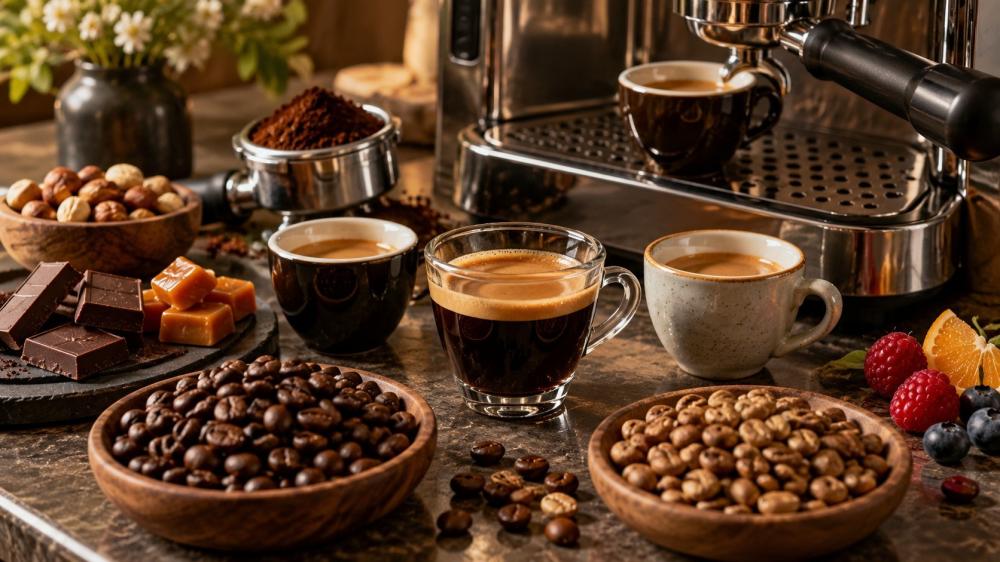
Choosing the best types of espresso coffee depends on the flavor you prefer, the type of coffee machine you use, and how you like to serve your drink, whether you enjoy espresso on its own or use it to prepare cappuccino and latte. Microlot Roastery offers a diverse selection of specialty coffee lots suitable for espresso, ranging from Brazilian coffees rich in chocolate notes to Ethiopian coffees with floral and fruity flavors.
Espresso is not a specific type of coffee bean. It is a brewing method that relies on forcing hot water through finely ground coffee under high pressure. For this reason, espresso can be prepared using different coffee origins, provided that the roast level, grind size, and recipe are suitable.
What Is the Best Coffee for Espresso?
When comparing the best types of espresso coffee, you can make your choice based on the result you want:
- Choose Brazilian coffee if you prefer chocolate, nuts, and a fuller body.
- Choose Colombian coffee for sweetness, balance, caramel, and fruity notes.
- Choose Ethiopian coffee if you enjoy floral, citrus, and berry flavors.
- Choose an espresso blend for a stable and easy-to-dial-in result.
- Choose a single-origin coffee to explore the characteristics of a specific region or farm.
- Choose a medium roast for a balance between sweetness and acidity.
- Choose a medium-dark roast for milk-based drinks and a stronger body.
You can start with the espresso coffee section and compare the available coffee lots based on tasting notes, processing method, and roast level.
What Makes Coffee Suitable for Espresso?
The best types of espresso coffee are able to provide a balance between sweetness, acidity, bitterness, and body when extracted under pressure. The word “espresso” on a coffee bag does not mean that the beans are botanically different, but they may be roasted in a way that makes them easier to extract using an espresso machine.
Several factors influence a successful choice:
Bean Quality
High-quality, uniform coffee beans help produce more consistent extraction, while defects or uneven bean sizes can lead to unbalanced flavors.
Roast Date
Coffee needs an appropriate resting period after roasting to allow some gases to escape. Using it too early may cause unstable extraction, while storing it for too long can reduce aroma and sweetness.
Grind Adjustability
Espresso is extremely sensitive to grind size. Even a small adjustment to the grinder can noticeably change extraction time and flavor.
Flavor Profile
Choose tasting notes based on how you serve the coffee. Chocolate and nutty flavors usually work well with milk-based drinks, while fruity and floral notes are more noticeable when drinking espresso on its own.
Arabica or Robusta for Espresso?
The best types of espresso coffee may include 100% Arabica beans or blends combining Arabica and Robusta, and each option offers different characteristics.
Arabica Coffee
Arabica is known for sweetness, aromatic diversity, and more complex flavors. Depending on origin, processing method, and roast level, it may offer notes of fruit, flowers, chocolate, caramel, and nuts.
Arabica is suitable for those who want:
- Specialty espresso with clear flavors.
- Balanced acidity and natural sweetness.
- A single-origin coffee experience.
- Easily distinguishable tasting notes.
Robusta Coffee
Robusta usually has a heavier body, higher bitterness, and more caffeine. It can also help create a thicker crema, which is why some Italian-style blends include a certain percentage of Robusta.
A thick crema alone does not mean the espresso is better. Flavor, balance, and extraction quality are more important than the appearance of the surface layer.
Single Origin or Espresso Blend?
Choosing between single-origin coffee and a blend when buying the best types of espresso coffee depends on your experience level and the result you want.
Single-Origin Coffee
Single-origin coffee comes from a specific country, region, or farm and is intended to highlight the characteristics of the origin, variety, and processing method. It is suitable for people who enjoy exploring different flavors and adjusting the extraction recipe for each coffee.
Espresso Blend
An espresso blend combines two or more coffees to achieve a specific and balanced flavor. A blend may include one coffee for sweetness, another for body, and a third for fruitiness or acidity.
Blends are often suitable for cafés and daily use because they are generally designed to provide consistent results and can also work well with milk.
Brazilian Coffee for Classic Espresso
Brazilian coffee is among the best types of espresso coffee for people who enjoy classic flavors and a full body. Many Brazilian coffees are known for notes of chocolate, caramel, hazelnut, almond, and dried fruit.
These flavors work well with:
- Single and double espresso.
- Cappuccino.
- Latte.
- Flat white.
- Cortado.
- Iced milk-based drinks.
You can browse Brazilian coffee lots, or discover Brazil Chocolate Coffee, which features dark chocolate, milk chocolate, and caramel notes. Check availability and pricing before ordering.
Colombian Coffee for Sweetness and Balance
Colombian coffee is considered one of the best types of espresso coffee because of its wide variety of flavor profiles. It may offer a classic combination of caramel, chocolate, and nuts, or a fruity experience with notes of grapes, pineapple, berries, and citrus.
Many Colombian coffees are well balanced, making them suitable for both straight espresso and milk-based drinks. Their natural sweetness can also reduce the perception of bitterness when extraction is properly adjusted.
Explore Colombian coffee lots, then choose a product based on its tasting notes, processing method, and suggested brewing style.
Ethiopian Coffee for Fruity Espresso
Coffee lovers who enjoy aromatic experiences often choose Ethiopian beans when looking for the best types of espresso coffee with flavors that differ from the traditional profile. These coffees may offer notes of jasmine, bergamot, berries, peach, lemon, and tropical fruits.
Light-roasted Ethiopian coffee may require more precise dialing in, such as:
- Using a grind size suitable for light roasts.
- Slightly increasing the water temperature.
- Increasing extraction time when necessary.
- Using a longer brew ratio.
- Allowing the espresso to cool slightly so the flavors become more noticeable.
Browse Ethiopian coffee if you prefer fruity espresso or want to try something different in cold coffee drinks.
How Processing Affects Espresso Flavor
The best types of espresso coffee can taste very different depending on how the coffee cherries are processed after harvest. Processing affects sweetness, acidity, body, and flavor clarity.
Washed Processing
Washed coffee usually produces a clean and clear cup and helps highlight origin characteristics and acidity with greater precision. Explore washed coffee lots.
Natural Processing
Natural processing often gives coffee greater sweetness, fruitiness, and body, making it suitable for espresso and milk-based drinks. Browse natural coffee lots.
Anaerobic Processing
Anaerobic processing can produce intense and complex flavors resembling ripe fruit, sweets, or spices. It is suitable for people who enjoy bold espresso. Explore anaerobic coffee lots.
Infused Processing
Infused coffees can offer direct and unconventional flavor profiles, but they may not suit people who prefer a classic espresso style. Compare options in the infused coffee section.
What Roast Level Is Best for Espresso?
The flavor of the best types of espresso coffee depends on roast level just as much as it depends on origin.
Roast LevelExpected ResultBest UseLightFruity, floral, brighter aciditySpecialty espressoMediumSweetness, balance, and bodyDaily useMedium-darkChocolate and moderate bitternessMilk-based drinksDarkRoasted flavors and strong bodyItalian-style espresso
There is no single roast level that works for everyone. If you drink coffee without additions, a light or medium roast may suit you. If you prepare latte and cappuccino, a medium or medium-dark roast may remain more noticeable after adding milk.
How to Choose Espresso Based on Flavor
You can find the best types of espresso coffee for your taste using this flavor guide:
Preferred FlavorSuggested ChoiceChocolate and nutsMedium-roast BrazilianCaramel and sweetnessWashed ColombianBerries and fruitNatural Ethiopian or ColombianFloral and citrusLight-roast EthiopianTraditional body and bitternessEspresso blendBold flavorsAnaerobic coffeeFlavor that works well with milkBrazilian or medium-roast blend
Read the tasting notes on the product page before buying. Do not assume that these notes are necessarily added flavorings; they are sensory descriptions of flavors the coffee may naturally remind you of.
How Your Espresso Machine Affects Coffee Choice
Even the best types of espresso coffee may behave differently from one machine to another. Water temperature, pressure stability, portafilter basket size, and coffee distribution quality all affect the final result.
Before buying coffee, consider:
- Does your machine use a pressurized or professional portafilter?
- Can you control the water temperature?
- What is the basket capacity in grams?
- Do you have a separate adjustable grinder?
- Do you mainly prepare espresso or milk-based drinks?
- Do you use a single or double basket?
If you have a simple home espresso machine with a pressurized basket, a medium roast may be easier to dial in. Professional machines give you more flexibility to experiment with light roasts and single-origin coffees.
Adjusting Espresso Grind Size
Even the best types of espresso coffee will not deliver the desired result without a good grinder. Espresso requires a fine and consistent grind, but the exact setting changes depending on bean age, humidity, roast level, and dose.
Use these indicators:
- If the espresso flows too quickly and tastes weak and sour, grind finer.
- If it flows too slowly and tastes bitter and dry, grind coarser.
- If channeling appears in the coffee puck, improve distribution and tamping.
- If extraction time changes daily, adjust the grinder gradually.
- Grind only the amount you need immediately before brewing.
- Purge a small amount of retained coffee when changing the grind setting.
Do not judge the cup based on crema alone. Taste the sweetness, acidity, bitterness, and finish.
A Practical Espresso Recipe
After buying one of the best types of espresso coffee, use this adjustable starting recipe:
- Coffee dose: 18g.
- Beverage weight: 36g.
- Ratio: 1:2.
- Extraction time: approximately 25 to 32 seconds.
- Water temperature: 90°C to 94°C.
- Pressure: according to your machine settings.
Brewing Steps
- Preheat the machine, portafilter, and cup.
- Weigh 18g of coffee beans.
- Grind the coffee immediately before brewing.
- Distribute the grounds evenly in the basket.
- Tamp evenly and consistently.
- Lock in the portafilter and begin extraction immediately.
- Stop the shot when you reach 36g.
- Gently stir the espresso before tasting.
- Adjust the grind or ratio according to the result.
These numbers are a starting point, not a strict rule. Some light-roasted coffees may improve with a longer ratio such as 1:2.5, while darker roasts may work better with a shorter ratio.
Best Coffee for Latte and Cappuccino
Milk-based drinks require the best types of espresso coffee with clear flavors that remain noticeable after milk is added. Coffees and blends with notes of chocolate, caramel, and nuts are usually a good match.
For a balanced drink:
- Use a double espresso.
- Choose a medium or medium-dark roast.
- Avoid overheating the milk.
- Adjust the milk ratio according to the drink.
- Try a balanced Brazilian or Colombian coffee.
- Avoid over-extraction to prevent excessive bitterness.
If you enjoy fruity lattes, you can try a natural Ethiopian or Colombian coffee with milk that does not completely overpower the flavors.
Buying Espresso Coffee in Saudi Arabia
Before ordering the best types of espresso coffee from an online store in Saudi Arabia, check:
- Country of origin and processing method.
- Tasting notes listed on the package.
- Recommended roast level.
- Roast date when the order arrives.
- Pack size suitable for your consumption.
- Whole bean or ground coffee option.
- Grind compatibility with your machine.
- Price and product availability.
- Shipping options to your city.
You can browse all Microlot coffee lots or check latest products, then review the shipping and delivery policy before completing your order.
How to Keep Espresso Beans Fresh
The best types of espresso coffee maintain their quality for longer when stored correctly. Keep the bag in a dry, dark place away from heat and strong odors.
Follow these tips:
- Seal the bag tightly after every use.
- Do not store the beans near an oven or sunny window.
- Buy an amount that matches your consumption rate.
- Do not grind all the beans in advance.
- Use an airtight container if the original bag cannot be resealed.
- Avoid leaving the coffee exposed to air.
- Record the date you opened the bag to monitor changes in flavor.
You may also need to adjust the grind over time because the beans gradually lose gas and their extraction behavior changes.
Common Espresso Brewing Mistakes
Even when choosing the best types of espresso coffee, some mistakes can prevent you from achieving a balanced cup, including:
- Using old coffee or coffee of unknown origin.
- Relying on coffee that was ground a long time ago.
- Not weighing the dose and beverage.
- Ignoring coffee distribution before tamping.
- Tamping unevenly.
- Using a dirty basket.
- Leaving coffee residue inside the group head.
- Changing dose and grind size at the same time.
- Relying only on extraction time.
- Focusing on crema while ignoring flavor.
- Using water with strong odors or high salinity.
- Not preheating the machine before brewing.
Start with a consistent recipe, then change only one variable at a time and record the result until you find the right settings.
Order the Right Espresso Coffee for Your Taste
There is no single coffee lot that represents the best types of espresso coffee for everyone. Your choice depends on how you drink coffee, the flavors you prefer, and the equipment you use. Choose Brazilian coffee for chocolate and nutty notes, Colombian coffee for balance and sweetness, Ethiopian coffee for floral and fruity flavors, or start with a balanced blend if you want an easy and repeatable result.
Order your coffee from the Microlot Store, or contact the team for help choosing the right option at +966 56 666 6361 or via email at [email protected]. Review the product description, price, and availability, then choose your beans and start dialing in your own espresso recipe.